Arashiyama Bamboo Groove, Fushimi Inari
Shrine, Golden Pavilion, Gion District and Daigoji Temple are just few of the
popular places to visit in Kyoto. Known as the city of thousands of temples, a few
days is not enough to visit them all. Aside from places, food is also as exciting!
Ramen, takoyaki, okinomiyaki, katsudon and sushi rolls are just few to try.
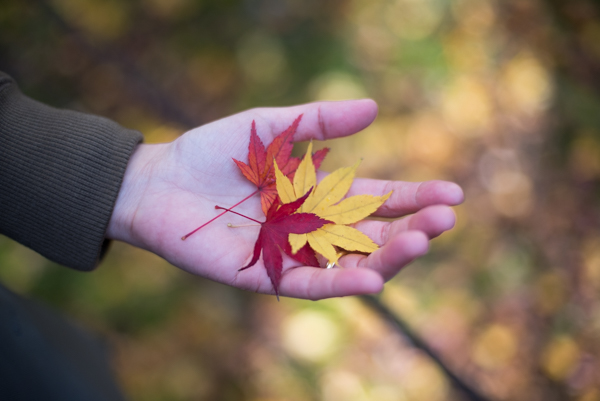
Most trees turn into red during autumn which is magical - just imagine how
breathtaking it would be during spring or Sakura season. Truly, Kyoto is a must
visit city as it offers ‘real’ Japan experience. If that excites you to travel
in Kyoto, then this is for you!
Kiyomizu-dera Temple
3:00 pm | Day 3 | Kyoto
After a long nap in the afternoon, we headed to Kiyomizu-dera Temple. From our guesthouse, it was about 22 minutes away by foot. Since we haven’t explored the neighbourhood yet, we decided to walk. Along the way we saw plenty of small restaurants and traditional tea shops.
From Fushimi Inari Shrine we headed to our next stop, Daigoji Temple. It
is a large complex by Shingon sect of Japanese Buddhism located south
of Kyoto and designated as world heritage site. Daigoji Temple is famous for
its grand temples, five-storey pagoda and its alluring gardens.
Fushimi Inari Shrine
6:00 am | Day 3 | Kyoto
Gion District
8 am | Day 2 | Kyoto
When travelling, one should be flexible with his schedule since weather can be
unpredictable at times. That happened on our second day in Kyoto. We were
awakened by a heavy rainfall that day. We were supposed to see more of
Kyoto’s historical places but because of that we had to change our plans.
Yasaka Shrine
4:30 pm | Day 1 | Kyoto |
After we had a short rest in Nanzenji Temple, we headed to Yasaka Shrine. It is a long walk to Yasaka Shrine so we advise you to take a bus. For us, we just walked to look for a cafe to have some snacks and warm us up. Since Yasaka Shrine is located in the heart of the district, it was not hard for us to find a place to eat. Infact, just outside the shrine there are plenty of restaurants and cafes. We did not even realize that there were food stalls as well inside.
"Yasaka Shrine, also known as Gion Shrine, is one of the most
famous shrines in Kyoto. Founded over 1350
years ago, the shrine is located between the popular Gion District and Higashiyama District, and
is often visited by tourists walking between the two districts.." [ref:
japan-guide.com]
4:30 pm | Day 1 | Kyoto |
![]() |
| <R> Yasaka Shrine during blue hour. |
After we had a short rest in Nanzenji Temple, we headed to Yasaka Shrine. It is a long walk to Yasaka Shrine so we advise you to take a bus. For us, we just walked to look for a cafe to have some snacks and warm us up. Since Yasaka Shrine is located in the heart of the district, it was not hard for us to find a place to eat. Infact, just outside the shrine there are plenty of restaurants and cafes. We did not even realize that there were food stalls as well inside.
Nanzenji Temple
"Nanzenji Temple, whose spacious grounds are located at the
base of Kyoto's
forested Higashiyama mountains, is one of the most important Zen temples in all of
Japan. It is the head temple of one of the schools within the Rinzai sect
of Japanese Zen
Buddhism and includes multiple subtemples, that make the
already large complex of temple buildings even larger." [ref: japan-guide.com]
2:30 pm | Day 1 | Kyoto |
| <K> The brick-made waterway bridge that is very much photographed by tourist. You should be creative on your shots to hide tourists or come here early otherwise. |
After Eikando Temple, we headed to Nanzenji Temple. The temple is just a 10-minute walk from Eikando Temple. Along the way you'll get to see the peaceful neighborhood and pass by food stalls selling Takoyakis. Walking to Nanzenji Temple was fun as we get along with other tourists enjoying the narrow but very clean streets.
Eikando Temple
"Eikando, formally known as Zenrinji Temple, belongs to the
Jodo sect of Japanese
Buddhism. Located just north of the large temple complex of Nanzenji, Eikando is very
famous for its autumn colors and
the evening illuminations that take place in fall. The temple has a long
history, and there are a variety of buildings and a pond garden that visitors
can explore." [ref: japan-guide.com]
1:00 pm | Day 1 | Kyoto |
After Ginkakuji, we headed to Eikando Temple. We rode Bus 32 using ICOCA card. The walk was a bit far from the bus stop but it was all worth it when we got there. Starting from the entrance gate, it was already crowded. People were taking picture everywhere of the maple trees. Some were just fine not entering the temple since from the ground itself is already beautiful. We were hesitant at first because of the huge crowd but in the end we decided to check the place. Surprisingly, we were in awe seeing lots of maples trees in full autumn colors. No wonder why this place is named as a must visit during autumn.
1:00 pm | Day 1 | Kyoto |
After Ginkakuji, we headed to Eikando Temple. We rode Bus 32 using ICOCA card. The walk was a bit far from the bus stop but it was all worth it when we got there. Starting from the entrance gate, it was already crowded. People were taking picture everywhere of the maple trees. Some were just fine not entering the temple since from the ground itself is already beautiful. We were hesitant at first because of the huge crowd but in the end we decided to check the place. Surprisingly, we were in awe seeing lots of maples trees in full autumn colors. No wonder why this place is named as a must visit during autumn.
Ginkakuji
"Ginkakuji (Silver Pavilion) is a Zen temple
along Kyoto's
eastern mountains (Higashiyama). In 1482, shogun Ashikaga Yoshimasa built
his retirement villa on the grounds of today's temple, modeling it after Kinkakuji (Golden Pavilion),
his grandfather's retirement villa at the base of Kyoto's northern mountains
(Kitayama). The villa was converted into a Zen temple after Yoshimasa's death
in 1490." [ref: japan-guide.com]
9:30 am | Day 1 | Kyoto |
From Heian Shrine we rode Bus 204 and paid using ICOCA Card. Buses in Kyoto have English voice prompts so there is no need to worry. In between transit, it will prompt what tourist spot is near. We disembarked to the bus stop nearest to Ginkakuji and walked to the entrance. Along the way there are lots of restaurants and souvenir shops. We arrived there around 9:30 am and it is already crowded.
9:30 am | Day 1 | Kyoto |
![]() |
| <K> Seeing the Ginkakuji in person feels like being transported in ancient Japan. |
After a long day of travel, we woke up energized to start
our day. Since Kyoto has too many places to visit, we sorted it by area. Day 1
is on the east side. Full of enthusiasm, we headed on our first stop.
Heian Shrine
![]() |
| <R> The entrance of the shrine with it's captivating colors. |